
Run a Starke County Property Search
Start with the county's public WTH system. It puts a parcel search, property-card link, and map view in one place. An address is usually the cleanest first key. An owner name can surface several parcels. The exact APN settles cases where two offices format an address differently. Copy what the screen shows. Resist the urge to fix a rural situs or strip punctuation from a parcel number.
- Search the WTH Starke viewer with the known address, owner, or parcel number.
- Open the matching result and save the APN, situs, owner, mailing address, Card link, and search date.
- Carry the owner, prior owner, subdivision, lot, block, or APN into the Recorder's Tapestry index.
- Compare the parcel with eNotices, Indiana Gateway, permits, GIS context, and MyCase when relevant.
- Order the instrument or office record when a certified or complete copy is required.
A good Starke County property search narrows from a broad clue to the office that owns each fact. Keep the failed terms too. A no-result search can be retried later with an entity name, an old road form, a prior parcel number, or a different office index.
Starke County WTH Search Fields
The WTH BasicParcels form offers owner last and first name. It also covers sale-date and sale-price ranges, neighborhood, property class, and acreage ranges. It also supports address, state parcel number, and county parcel number searches. That range of fields lets a search begin well before you know a situs. Broad terms carry a cost, though. A common surname returns 189 parcels. Narrow only after confirming how the owner of record is styled.
| Field | Input | Best use | Limit |
|---|---|---|---|
| Owner | Last and first | Person or entity holdings | Trusts and LLCs vary |
| Sales | Date and price ranges | Find a sale lead | Not every transfer is a sale |
| Neighborhood | Assessor grouping | Narrow a valuation area | Not a legal plat |
| Property class | Class filter | Separate broad uses | Assessment purpose only |
| Acreage | Minimum/maximum | Narrow rural tracts | Confirm in deed or survey |
The live Starke County parcel form is the source for these controls.
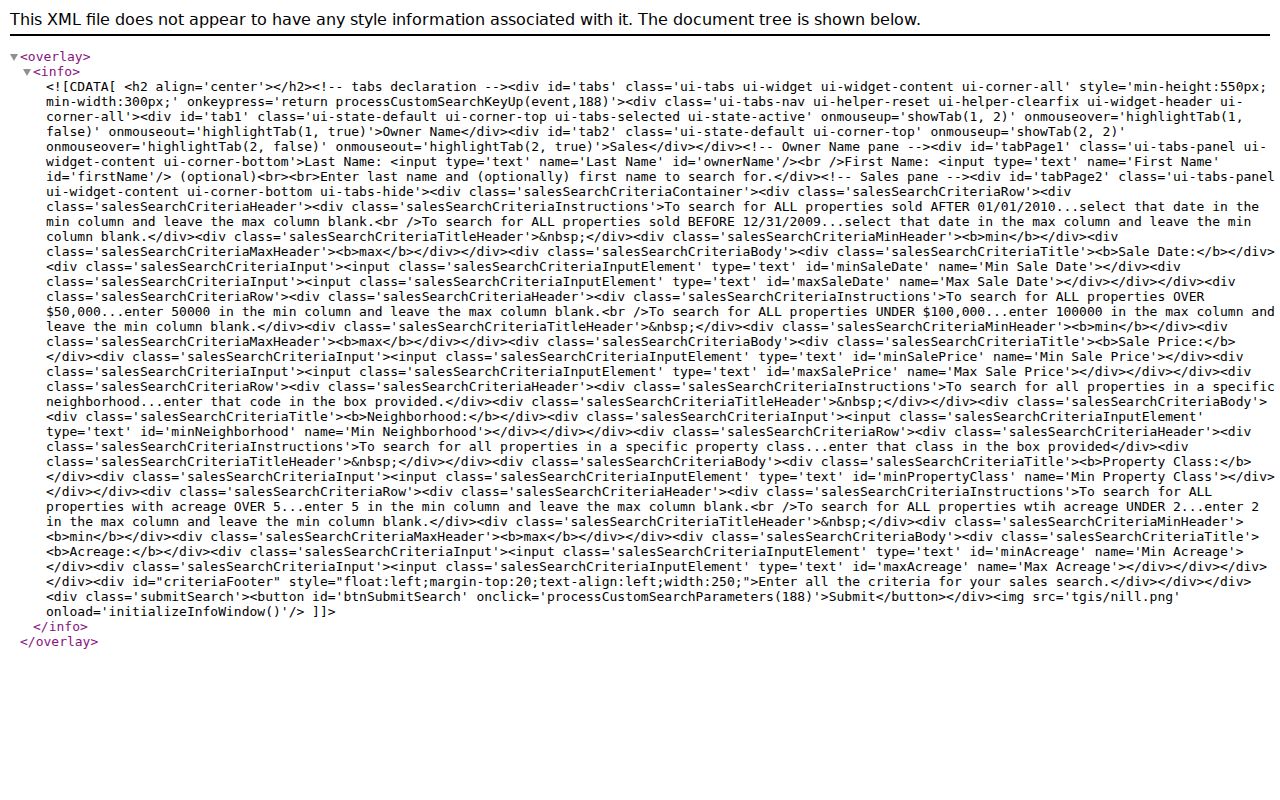
The official WTH search form shows why a Starke County property search can start with far more than a street address.
Read Starke County Search Results
Each WTH result can display an APN, owner, property address or situs, and owner mailing address. It also shows a Card control and a Zoom control. The owner is the named party on the assessment record. The situs identifies the land itself. A mailing address is only a contact point, and it does not prove residence. Card opens the printable parcel record; Zoom adds map context. These distinctions matter. The owner can be a trust, an LLC, a couple, or a life estate. The owner search result page shows this layout with its Card and Zoom choices.
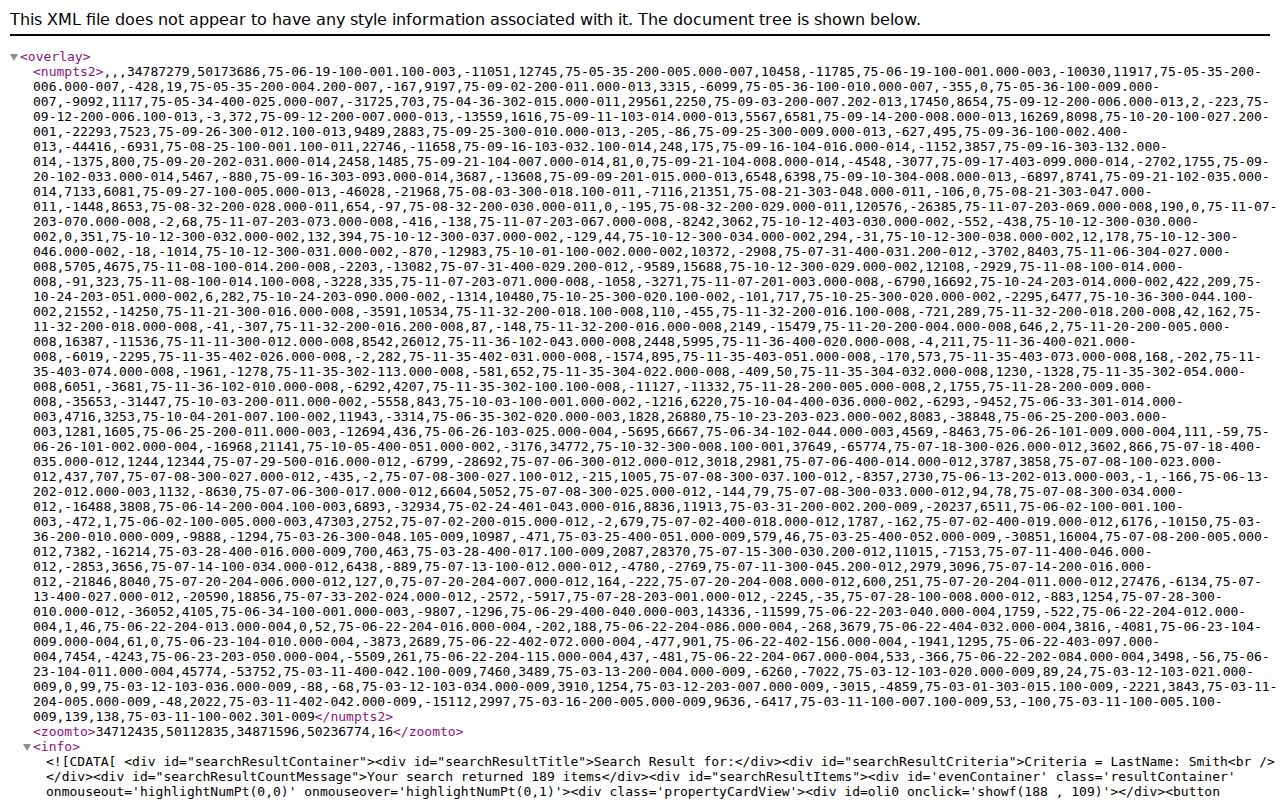
A broad result is just a list of candidate parcels. Open each one and verify it, rather than treating a shared surname as proof of identity.
Fields in a Starke County Record
Treat a result as an inventory of clues. Each one is tied to a source and a date. Copy text exactly as shown. The segmented APN often works as a join key. Yet tax-sale notices may use a compact parcel form instead. No office publishes a confirmed key for decoding every segment. So never guess at what each part means.
| Owner | Assessment-roll name that may require deed confirmation |
|---|---|
| Situs / Mailing | Land location versus the tax contact address |
| Parcel Number | Exact APN used to match map, tax, and request records |
| Card | Printable property-record endpoint for assessment detail |
| Zoom | Mapped parcel and visible geographic context |
| Sale Lead | Date or price range to test against a deed |
A search result sets no legal boundary and offers no title opinion. WTH's own disclaimer states the map is not a legal description or document. Tie ownership to the newest relevant recorded deed. Tie boundaries to plats, deeds, and corner evidence. When needed, add a licensed survey.
Match Starke County Parcel Numbers
WTH shows parcel numbers like 75-06-19-100-001.100-003. Tax-sale material uses compact values such as 004-00231-00. Keep both exactly as each source prints them. Stripping a zero or adding a dash by feel corrupts the identifier. Search the full value first. Try the alternate format only when another official record supplies it.
Parcel splits and combinations can break a one-number search. Hunt for parent and child APNs, legal descriptions, subdivision and lot terms, and any filed routing document. A county notice reports that processing for combinations, splits, lot-line adjustments, and subdivisions is suspended through September 19, 2026, unless stated otherwise. The reason is staff shortages. For a pending change, keep the filed record and recheck WTH.
Search Starke County Deed Names
Once WTH gives you an owner, move to the Recorder's Tapestry index. Start broad with the current owner as grantee and an approximate date. Then search the prior owner as grantor. Add document type, subdivision, lot, block, parcel number, or legal-description terms as needed. Name forms shift through marriage, initials, trusts, estates, and company names. Run grantor and grantee searches separately.
Starke County indexes deeds back to 1967. Miscellaneous instruments date to 1961, and mortgages to 1997. Scans reach back to 1850. A scan can still exist without a modern searchable index field. The Fidlar Tapestry explanation covers its search and payment model.

The help screen supports a staged query approach. Confirm exact Starke County choices and current image prices inside the live Tapestry session.
Recover a Failed Starke Search
A dead end is information, not defeat. When a WTH name search returns nothing, the problem may be spelling. It could also be an entity holder or assessor lag. Run the surname again. Then try the trust or LLC name, the APN, the address, and the map. When Tapestry shows no match, the cause could be an index cutoff. It could be a different party name or the wrong instrument class. Work through grantor and grantee spellings, the legal description, and the office index itself.
A missing tax result may point to the wrong year. It may also be a parcel format issue or county-reported data. Try Gateway, then ask the Auditor or Treasurer directly. When a permit search returns nothing, iWorQ's coverage years were never stated, so the absence proves little. Ask Planning for existing files tied to the address and APN. A MyCase docket with no document attached can reflect access rules or scanning history; request the cause file from the Clerk.
Test address variants methodically. Abbreviated road types and directional prefixes deserve a pass. So do house-number spacing, intersections, and older street forms pulled from a deed or directory. For a legal description, strip punctuation from the subdivision name. Search lot and block separately. When a parcel was divided or combined, run both the parent and child APNs. An old parcel's result does not guarantee the present tract keeps the same bounds.
Note: Save the unsuccessful term and date beside the successful one so another researcher can reproduce the search.
Starke County Tax Search Fallbacks
County eNotices accepts a parcel number, a name, or an address. When it misses, Indiana Gateway gives you more angles. Gateway offers several search fields. You can use pay year, county, district or unit, taxpayer, address, or parcel. Rate range, total bill range, and sorting are also available. Counties report that data themselves. The Treasurer and Auditor remain the offices for corrections or certified figures.
The tax screen helps check a bill and tax year. It does not clear a mortgage, prove title, or show every transfer. The DLGF assessed-value search likewise provides assessment-year value and an export. A 2015 assessment value belongs with the 2016 tax bill. Preserve both the assessment year and the pay year.
Sometimes the bill and the WTH record disagree. Compare taxpayer name, mailing address, parcel form, district, and year before calling either entry wrong. The Auditor may hold a transfer or deduction filing that explains the change. The Assessor can explain the assessment card. The Treasurer handles billing and payment. Keep a screenshot or export with its access date. Each system updates on its own schedule.
Starke Permit Searches by Address
The public iWorQ permit search takes a permit number, a permit date, a parcel address, or a primary contractor. Dates run from start to end. Results can show permit number, date, type, owner, status, inspection request, and a View link. It helps when a sale lead suggests work. Think additions, demolitions, pools, and solar.
The portal does not state its public coverage years, copy fees, result limits, or record retention. An empty address result proves little. Send Planning a narrow request for permit applications, inspection history, and certificates tied to that address and APN. A permit record can explain the work. It cannot prove ownership or final inspection without the file.
Search dates and addresses separately when the construction year is only approximate. The portal lists permit type, owner, and status, but read those labels in permit context. The named owner is not always the deed grantee. Compare dates. Match the permit date against assessor improvement history and recorded transfers, then ask for the application and inspection record if the sequence matters.
Define Starke County Search Terms
These terms keep a Starke County property search precise. Use each source's own label and record year whenever you can.
- APN or parcel number
- The assessor's identifier for a mapped tax parcel.
- Situs
- The location assigned to the land, which may not be a postal address.
- Owner of record
- The owner name carried in a given official record at that record's update date.
- Legal description
- The deed or plat wording that identifies land through lots, blocks, sections, or boundary calls.
- Instrument number
- A recorder reference assigned to a filed document.
A rural situs can read like an intersection, say a road and corner description. Preserve it as written. A guessed number can break the link to the parcel.
Ownership labels need the same care. A person can appear as a grantee on an old deed. A person can also show up as a tax-mail recipient, a trustee, a life tenant, or a neighboring owner. An LLC can hold the recorded interest. A person may show up only in a business filing. Tax payers and owners can differ. Name the field and the record date rather than flattening every role into "owner."
Choose a Starke County Search Key
The best key depends on your clue and the portal. An address works well for a known place. But it can fail on abbreviations, old road names, directions, or house-number spacing. Owner searches can reveal holdings. Yet they may mix same-name parties. The parcel number stays exact within its source once you handle format changes and splits.
| Search Key | Best For | Where It Works | Watch Out |
|---|---|---|---|
| Address | A known site | WTH, tax, permits | Road forms and rural situs |
| Owner name | Possible holdings | WTH and Tapestry | Entities, life estates, same names |
| Parcel number | An exact parcel lead | WTH, tax, requests | Compact forms, splits, leading zeroes |
Not a title search. A Starke County property search finds public entries but does not guarantee clear title, resolve priority, or replace review by a title professional or attorney.